Key Points
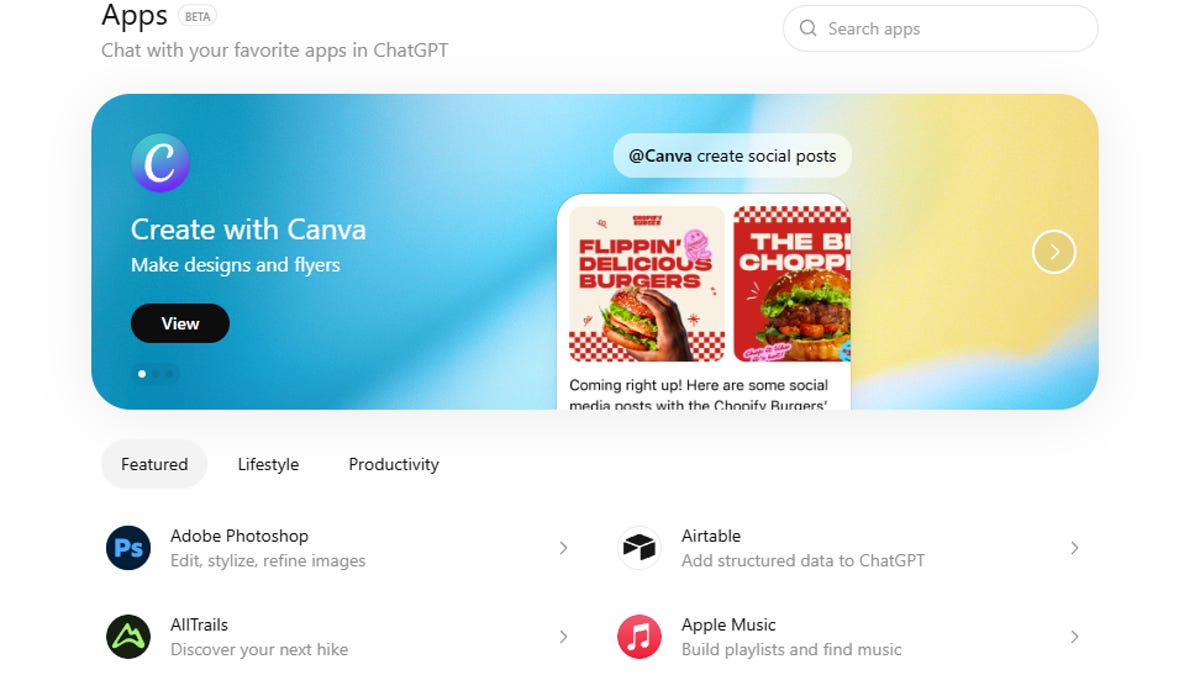
- OpenAI adds an app store inside ChatGPT, featuring tools like Adobe Photoshop, Spotify, Canva, and Zillow.
- Apps are organized into Featured, Lifestyle, and Productivity categories, mirroring traditional app stores.
- Users connect apps via a “Connect” button and invoke them with @‑prompts (e.g., “@canva create a presentation”).
- The desktop version of ChatGPT displays the new apps; the iOS mobile version has not yet received them.
- OpenAI announced developer submissions on Dec. 17, and apps appeared within a day on the desktop client.
- ChatGPT serves more than 800 million active users, providing a large audience for integrated apps.
- Ziff Davis has sued OpenAI, alleging copyright infringement related to AI training and operation.
- Connected apps can be reviewed in Settings → Connected Apps (or Settings → Data Controls → Connected Apps).
OpenAI Expands ChatGPT With Integrated App Store
OpenAI has rolled out an app platform inside ChatGPT, giving users the ability to run well‑known digital tools without leaving the chatbot interface. At launch, the store includes services such as Adobe Photoshop, Spotify, Canva, and Zillow, among others. The apps appear in the desktop version of ChatGPT and are organized into three categories—Featured, Lifestyle, and Productivity—mirroring familiar layouts from major app marketplaces.
To use an app, users click a “Connect” button, granting ChatGPT access to the service. Once connected, the app can be invoked with an @‑prompt, for example, “@canva create a 2025 wrap presentation for my class.” The interface also provides screenshots and prompt examples to guide users on how to interact with each app.
Although the desktop experience already showcases the new apps, the mobile iOS version does not yet display them, according to testing. Users who forget which apps are linked must navigate through Settings → Connected Apps (or Settings → Data Controls → Connected Apps, depending on the version) to review their connections.
Background and Context
The app store debuted shortly after OpenAI announced on Dec. 17 that developers could submit applications for inclusion. Within a day, apps began appearing in the desktop client, signaling a rapid rollout. OpenAI’s move comes as the chatbot boasts more than 800 million active users, underscoring the platform’s massive reach.
Legal challenges accompany the launch. Ziff Davis, the parent company of CNET, has filed a lawsuit against OpenAI, alleging that the AI system infringed its copyrights during training and operation. The dispute highlights ongoing tensions between AI developers and content owners.
Implications for Users and Developers
For users, the integrated app store simplifies workflows by eliminating the need to switch between separate applications and the chatbot. Developers gain a new distribution channel to reach a large, engaged audience within the ChatGPT ecosystem. The categorization and prompt‑based interaction model aim to make third‑party services feel native to the conversational experience.
Overall, OpenAI’s app platform represents a significant step toward a more unified AI‑driven productivity environment, though its full potential will depend on broader mobile rollout and resolution of ongoing legal disputes.
Source: cnet.com