
Key Points
- Gemini now can access data from connected Google apps like Calendar, Photos, and Gmail.
- The personalization feature is in beta for Google AI Pro and Ultra subscribers.
- Rollout includes web, Android, and iOS versions for personal accounts only.
- Users choose which apps to link; the feature is off by default.
- Google does not use full app content to train its broader AI models.
- Limited prompt and response data may be used to improve the feature.
- Powered by the Gemini 3 model for advanced multimodal reasoning.
- Future plans include free access, non‑U.S. availability, and Search integration.
Feature Overview
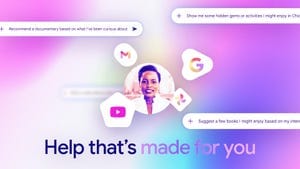
Google announced that Gemini, the company’s flagship AI, now includes a personalization layer that can access information from a user’s Google ecosystem. When a subscriber links apps such as Google Calendar, Google Photos, and Gmail, Gemini can incorporate details from those sources to generate answers that are tailored to the individual’s needs and preferences. For example, a query about the best tires for a vehicle could be answered with a recommendation that reflects the user’s off‑road interests as indicated by calendar events and travel photos.
The personalization feature is being released in beta to Google AI Pro and Ultra subscribers. It is rolling out across web, Android, and iOS versions of Gemini for personal Google accounts, while workplace and enterprise accounts are excluded at this stage. Google has indicated that the feature will become available for free and to non‑U.S. users in the future, and that integration with AI Mode in Search is planned.
How It Works
Gemini has long been able to retrieve information from Google services, but the new update adds the ability to reason across that data. The model can combine text, images, and video from the connected apps to produce answers that consider the user’s unique context. This multimodal reasoning is powered by Gemini 3, the latest model designed for nuanced tasks.
User Controls and Privacy
The personalization function is off by default. Users decide which apps to connect during setup and can opt out of any service, such as linking Calendar but not Gmail. Google emphasizes that it will not use the entirety of a user’s inbox or other app data to train its broader AI models. Instead, limited information, such as specific prompts and Gemini’s responses, may be used to improve the feature’s functionality over time, consistent with the company’s privacy policy.
By giving users granular control and keeping the personalization data confined to the individual’s experience, Google aims to balance enhanced utility with privacy safeguards.
Impact and Reception
Early testers, including a Gemini app executive, reported that the personalization feature makes daily interactions with the AI smoother and more relevant. The ability to draw on personal data allows Gemini to provide recommendations that feel more like a knowledgeable assistant than a generic search tool.
Overall, the rollout marks a step toward making AI responses more context‑aware and useful for everyday tasks, while maintaining user‑controlled privacy settings.
Source: cnet.com