
Key Points
- Google Photos Remix provides quick, one‑tap AI filters for common styles.
- Preset filters can become repetitive and may stray from the original image.
- Custom prompts let users specify lighting, era, artistic style, and more.
- Models like Nano Banana produce results that stay true to the source while adding creative detail.
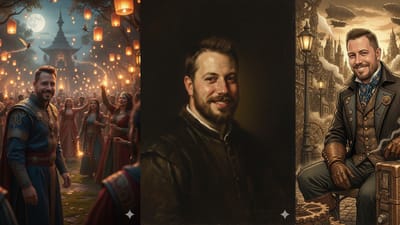
- Examples include cinematic movie‑poster looks, 1920s historical scenes, Dutch Old Masters style paintings, authentic 8‑bit game screenshots, and steampunk fantasy settings.
- Tailored prompts give more control and richer outcomes than generic Remix presets.
- Use Remix for fast edits; use custom prompts for detailed, high‑fidelity transformations.
Google Photos Remix: Easy but Limited
Google Photos has integrated an AI Remix feature that offers a collection of ready‑made templates for one‑tap photo transformations. Users can select from options that turn pictures into clay sculptures, comic‑book panels, or retro 8‑bit video‑game scenes. The presets are designed for speed and simplicity, allowing anyone to apply a creative filter without crafting a prompt.
Despite their charm, the Remix templates often start to look similar after repeated use. Because they rely on generic adjustments, the results can drift away from the original image’s content and mood, delivering a version that feels more like a filter than a faithful reinterpretation.
Custom Prompts with Nano Banana: Precision and Depth
Models such as Nano Banana give users the ability to write detailed prompts that guide the AI’s creative process. By describing specific cinematic lighting, historical clothing, or an artistic school’s brushwork, users can shape the output to match a precise vision while preserving the subject’s identity.
Examples include asking the AI to “reframe a photo as a cinematic still from a blockbuster movie poster” with dramatic lighting and lens flare, or to “turn the image into a historically accurate scene from the 1920s” with period‑appropriate attire and film grain. These prompts produce images that feel richer and more authentic than the generic Remix filters.
Artistic Styles and Genre Experiments
Custom prompts also enable nuanced artistic transformations. Users can request a re‑creation in the style of the Dutch Old Masters, specifying accurate brushwork, lighting, and composition. This approach yields a painting that reflects true artistic techniques rather than a simple stylized overlay.
For retro gaming fans, a prompt can generate an 8‑bit video‑game screenshot with low‑resolution pixel art, limited color palettes, and on‑screen UI elements like hearts or scores. The result feels like an actual game scene instead of a novelty filter.
World‑Building and Fantasy Themes
Beyond historical and artistic styles, prompts can conjure immersive fantasy settings. A request to “transform the photo into a richly detailed steampunk setting” adds brass gears, Victorian clothing, and steam‑powered devices, creating a cohesive alternate world that still recognizably features the original subject.
These examples demonstrate how the specificity of a well‑crafted prompt guides the AI to produce images that are both imaginative and faithful to the source, a level of control that Google Photos’ preset Remix cannot match.
When to Use Each Tool
Google Photos Remix remains useful for quick, on‑the‑fly edits when users need an instant visual change without spending time on prompt engineering. However, for projects that demand artistic fidelity, historical accuracy, or a unique visual narrative, custom prompts with models like Nano Banana deliver superior results.
Overall, the ability to articulate detailed creative intent empowers users to harness generative AI in ways that preset filters simply cannot achieve.
Source: techradar.com