
Key Points
- Google AI Mode now includes Personal Intelligence.
- The feature can access Gmail and Google Photos for personalized responses.
- Initially available to Google AI Pro and AI Ultra subscribers in the United States.
- Opt‑in model; users can enable or disable the integration at any time.
- Examples include customized travel itineraries and shopping suggestions.
- AI does not train directly on private email or photo content.
- Privacy controls let users manage data access.
Google Introduces Personal Intelligence to AI Mode
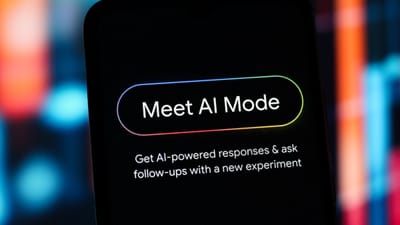
Google announced that its conversational search tool, AI Mode, will now incorporate a feature called Personal Intelligence. This addition enables the AI to reference information stored in a user’s Gmail inbox and Google Photos collection, creating responses that are tailored to the individual’s interests and recent activities.
The rollout begins with Google AI Pro and AI Ultra subscribers who use the service in English within the United States. Participation is optional; users can enable or disable the feature at any point, giving them control over how much of their personal data the AI can access.
How Personal Intelligence Works
Instead of training directly on the raw contents of a user’s email or photo library, the system uses specific prompts and the model’s responses to generate personalized suggestions. By tapping into the wealth of data already present in Google’s ecosystem, the AI can produce recommendations that feel more relevant and contextual.
Practical Examples
When planning a family vacation, the AI can reference a hotel reservation found in Gmail and past travel photos to propose an itinerary that includes activities and dining options suited to the group’s preferences. For shopping, the AI can consider the brands a user typically purchases and the timing of an upcoming trip, offering suggestions for appropriate apparel that matches both style and weather conditions.
Additional use cases include creating personalized scavenger hunts, generating themed décor ideas for a child’s bedroom, and offering tailored travel plans based on previous trips captured in photos.
Privacy and Control
Google emphasizes that users retain full control over the Personal Intelligence feature. It can be turned on or off at any time, ensuring that individuals who are uncomfortable with AI accessing their emails or photos can keep the feature disabled.
Robust privacy safeguards are in place, and the AI does not train directly on a user’s private content. Instead, it leverages prompts and model responses to provide the personalized experience.
Implications for the AI Landscape
By integrating Personal Intelligence into AI Mode, Google aims to deliver a more seamless and individualized user experience that rivals may find difficult to replicate without comparable access to a broad ecosystem of personal data. The move underscores Google’s strategy of deepening the connection between its AI offerings and the suite of services that users already rely on daily.
Source: techcrunch.com