
Key Points
- OpenAI is testing ads for ChatGPT users on the Free and Go tiers in the United States.
- Ads are matched to conversation topics, past chats, and prior ad interactions.
- User conversations remain private; advertisers only receive aggregate performance data.
- Users under 18 and topics like health and politics are exempt from ads.
- Free‑tier users can opt out of ads, but this reduces their daily free message limit.
- Go subscribers, who pay $8 a month, still see ads, prompting criticism.
- Community reaction on Reddit is largely negative, with users threatening to switch services.
- OpenAI says ads will help fund broader access to advanced ChatGPT features.
OpenAI Rolls Out Ads to Free and Go Users
OpenAI announced that it is testing advertisements for ChatGPT users who are logged in, reside in the United States, and are subscribed to either the Free tier or the Go tier. Users on the Plus, Pro, Business, and Enterprise plans are not affected by this test. The rollout is part of an effort to generate additional revenue as the company works to achieve profitability despite charging up to $200 a month for its premium plans.
How the Ads Are Designed to Work
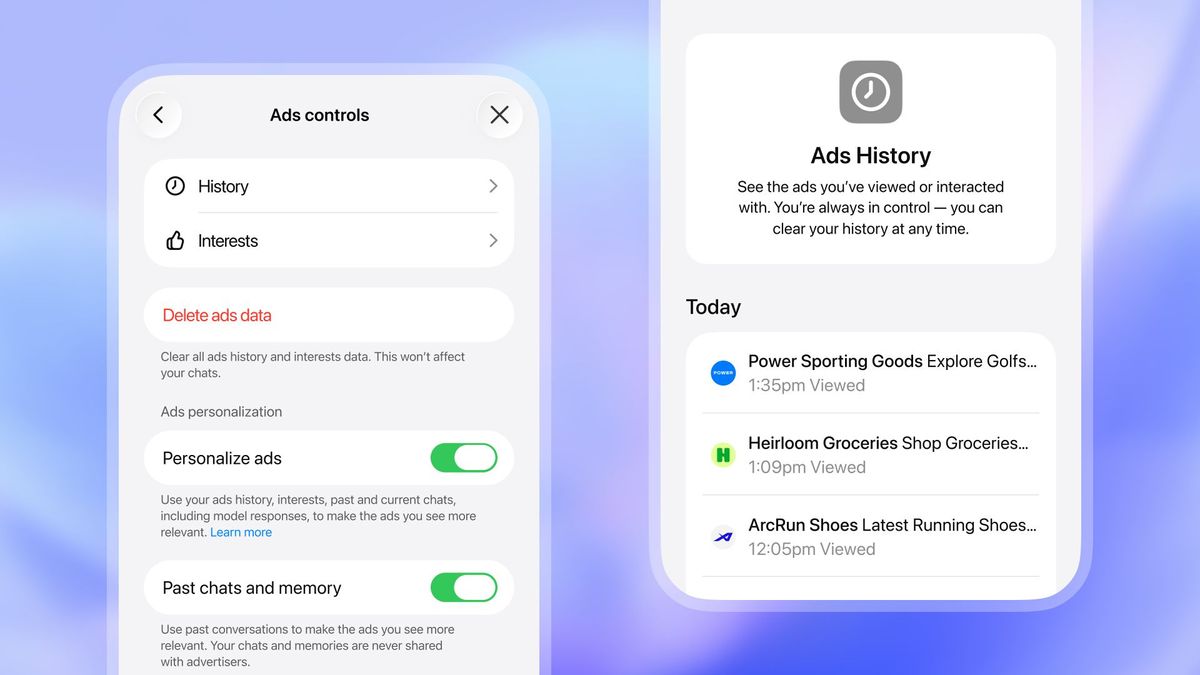
The company assures users that ads will not influence the answers provided by the chatbot. OpenAI also states that advertisers will not have access to individual conversations, chat history, memories, or personal details. Instead, advertisers receive only aggregate performance data such as the number of views or clicks. Ads are matched to the topic of the conversation, past chats, and prior interactions with ads, meaning a user researching recipes might see ads for meal kits or delivery services.
User Privacy and Opt‑Out Options
OpenAI emphasizes that users under 18 will not see ads, and ads will not appear alongside “sensitive or regulated topics” such as health and politics. Free‑tier users can opt out of ads, but doing so reduces the number of daily free messages they can send. The company did not clarify whether Go users have a similar opt‑out option. Users can dismiss an ad, provide feedback, or delete ad data collected about them through the ChatGPT settings.
Community Reaction and Criticism
The announcement has triggered a wave of negative feedback across social media platforms, especially Reddit. Users have described the move as a sign that “ChatGPT is done” and have threatened to switch to competing AI chat services. Some commenters likened the development to “enshittification,” a term used to describe services that shift focus from customers to investors, potentially degrading product quality. The fact that Go subscribers, who pay $8 a month, still encounter ads has been highlighted as a point of frustration, with some users feeling they are being “nickel‑and‑dimed.”
OpenAI’s Rationale
OpenAI frames the ad test as a way to support broader access to more powerful ChatGPT features while maintaining user trust for important and personal tasks. The company describes the rollout as a learning phase intended to listen to user feedback and refine the experience. By supplementing revenue with advertising, OpenAI hopes to secure the long‑term future of ChatGPT without relying solely on subscription fees.
Looking Ahead
The ad test is still in its early stages, and OpenAI has not disclosed how long it will run or when broader rollouts might occur. As the AI landscape grows more competitive, the company’s decision to introduce ads reflects a broader industry trend of exploring diverse monetization strategies. User sentiment will likely play a critical role in shaping the final implementation, and the ongoing backlash suggests that OpenAI may need to address concerns about privacy, ad relevance, and the value proposition for paying subscribers.
Source: techradar.com