
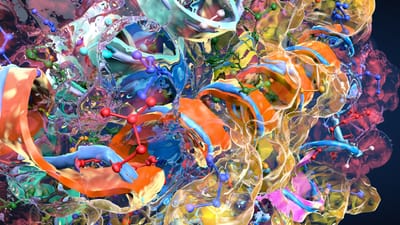
Key Points
- AlphaFold2 achieved atomic‑level protein structure predictions.
- The public database now holds over 200 million predicted structures.
- Nearly 3.5 million researchers in 190 countries use AlphaFold daily.
- AlphaFold 3 expands predictions to DNA, RNA and drug‑like molecules.
- DeepMind pairs generative diffusion models with verification to limit hallucinations.
- An AI co‑scientist built on Gemini 2.0 generates and debates research hypotheses.
- Collaboration with Imperial College showcased rapid hypothesis generation for virus‑bacterial studies.
- Future goals include simulating whole cells and deeper insight into the nucleus.


alphafold
Origins and Breakthrough
DeepMind, originally known for teaching artificial intelligence to master games, redirected its expertise toward a fundamental scientific problem: protein folding. The result was AlphaFold2, a system capable of predicting three‑dimensional protein shapes with atomic accuracy. This achievement was described as an “iPhone moment” for biology, marking a shift from recreational AI to a tool with transformative scientific impact.
Global Impact and Adoption
AlphaFold’s predictions have been compiled into a publicly available database that now contains over 200 million predicted structures—essentially the entire known protein universe. The resource is accessed by nearly 3.5 million researchers in 190 countries, illustrating its rapid integration into laboratories worldwide. The 2021 Nature article announcing the algorithm has been cited tens of thousands of times, underscoring its influence across disciplines.
Expanding Capabilities with AlphaFold 3
Building on the success of AlphaFold2, DeepMind released AlphaFold 3, extending AI predictions to DNA, RNA and small‑molecule interactions. This expansion required new modeling approaches, including diffusion models that are more generative but also prone to hallucinations. To mitigate this, DeepMind incorporates confidence scores and rigorous verification steps, ensuring that predictions remain reliable, especially for intrinsically disordered proteins.
AI Co‑Scientist and Multi‑Agent Systems
DeepMind is developing an AI co‑scientist built on the Gemini 2.0 platform. This multi‑agent system generates hypotheses, debates ideas internally, and suggests experimental directions. Early collaborations, such as with Imperial College researchers studying virus‑bacterial interactions, demonstrated the system’s ability to rapidly synthesize vast literature and propose novel mechanisms that human teams later validated experimentally.
Future Directions and Challenges
While AlphaFold has transformed structural biology, DeepMind aims to tackle broader unsolved problems, including simulating entire cells. Understanding the nucleus, gene expression timing, and signaling pathways are identified as next milestones. The partnership model—where AI handles hypothesis generation and humans focus on problem selection and experimental validation—is seen as a way to accelerate discovery while preserving essential human insight.
Source: wired.com