
Key Points
- Commissioner Magnus Brunner backs Parliament’s targeted scanning approach over the Council’s voluntary model.
- He rejects the nickname “Chat Control,” emphasizing child protection as the primary goal.
- Parliament, led by Javier Zarzalejos, prepares for trilogue negotiations to finalize the legislation.
- Member states such as Italy, the Czech Republic, Poland, and the Netherlands oppose the proposal.
- Privacy advocate Markéta Gregorová warns that any mass scanning threatens digital privacy.
- The Danish Presidency has removed mandatory scanning obligations for messaging providers.
- The upcoming trilogue will seek to balance child‑protection needs with fundamental rights.


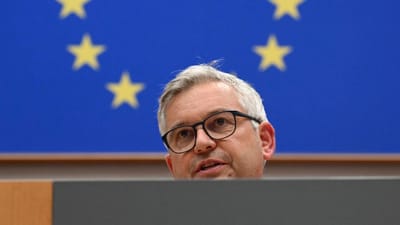
EU Commissioner for Internal Affairs and Migration Magnus Brunner delivers a speech during a session of the European Parliament in Brussels, on November 12, 2025.

Eu
Commissioner Brunner’s Position on Child Abuse Scanning
During a recent session of the Committee on Civil Liberties, Justice and Home Affairs, EU Commissioner for Home Affairs Magnus Brunner outlined his view on the ongoing legislative effort to combat child sexual abuse material online. While he remains committed to the original 2022 Commission proposal, Brunner expressed a clear preference for the European Parliament’s targeted measures over the Council’s proposal for voluntary, broad‑scale scanning. He stated, “I would prefer the Parliament position to the Council position, because the Council position is a compromise of a compromise of a compromise. But I still think the Commission’s proposal is the best proposal.”
Rejecting the “Chat Control” Nickname
Brunner also rejected the term “Chat Control,” which critics have used to describe the legislation. He argued that the label mischaracterises the intent of the proposal, emphasizing that the focus is on child protection rather than mass surveillance. “It’s not about Chat Control, it’s about protecting our children, it’s about fighting against the pedophiles,” he said.
Parliamentary Momentum and Upcoming Trilogue
The discussion highlighted the strong mandate the European Parliament holds for a targeted approach. Legislators, led by LIBE Committee Chair and rapporteur Javier Zarzalejos, are preparing for trilogue negotiations with the Commission and the Council. These talks aim to finalise a binding text that balances child‑protection goals with fundamental rights.
Opposition and Privacy Concerns
Despite the progress, several member states—including Italy, the Czech Republic, Poland, and the Netherlands—remain opposed to the proposal. Privacy advocates, such as Markéta Gregorová of the Czech Pirate Party, voiced strong criticism of any scanning regime, comparing it to forcing citizens to hand over every letter for police review. Gregorová warned, “Let’s face it. Voluntary or not, mass scanning is still mass scanning of private communications. And it does not help minors.”
Role of the Danish Presidency
The Danish Presidency has already dropped mandatory scanning obligations for all messaging providers, but the voluntary solution under discussion still raises concerns about privacy and security. Experts caution that even a voluntary framework could lead to violations of digital secrecy and the right to anonymous communication.
Outlook
As the trilogue negotiations commence, the balance between child‑protection imperatives and digital‑rights safeguards will be the central focus. Brunner’s endorsement of a targeted approach provides a potential pathway for the Parliament to defend fundamental rights while addressing the urgent need to combat online child sexual abuse material.
Source: techradar.com