
Key Points
- Larry Ellison argued in 1987 that AI should be used sparingly and only where it truly simplifies database development.
- He distinguished between AI as an internal tool and AI as an end‑user novelty.
- Ellison called building simple algorithmic rules as expert systems “the height of nonsense.”
- He advocated for fifth‑generation, declarative development tools that replace procedural coding.
- Later comments emphasized moving application logic to servers and reducing reliance on client‑side PCs.
- Ellison’s cautions about over‑applying AI remain relevant amid today’s AI hype.

Background of the 1987 Roundtable
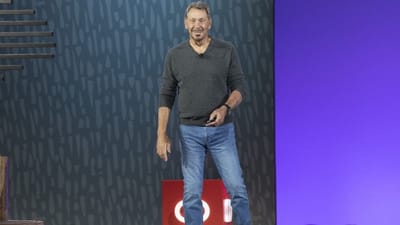
Computerworld convened a roundtable in 1987 to examine how artificial intelligence might intersect with database systems. The discussion was chaired by tech influencer Esther Dyson and featured three distinct viewpoints: Tom Kehler of Intellicorp championed the expert‑systems movement, John Landry of Cullinet advocated for AI‑driven enterprise applications, and Larry Ellison, then president and CEO of Oracle, took a contrarian stance.
Ellison’s Core Argument
Ellison repeatedly emphasized limits on AI usage. He argued that intelligence should be applied sparingly, embedded deeply, and never treated as a universal solution. Quoting his own words, he said Oracle’s primary interest was “applying expert system technology to the needs of our own customer base,” focusing on database management and the needs of systems developers, programmers, analysts, and MIS directors.
He distinguished between AI as an end‑user novelty and AI as an internal tool that improves how systems are built. Ellison rejected the notion that expert systems could replace human judgment wholesale, noting that “many expert systems are used to automate decision making, but a systems analyst is an expert, too.”
Selective Use of Expert Systems
Ellison drew a clear line between processes that genuinely require judgment and those that do not. He cited order‑processing clerks and checking‑account processing as examples where performance and recovery are critical, and where algorithmic solutions, not expert‑system overlays, are appropriate. When asked about automatically transferring funds if an account balance dropped below a threshold, he called building such a rule as an expert system “the height of nonsense.”
He warned that a whole generation built solely on expert‑system technology would be a misuse, insisting that expert systems should be “selectively employed” and that “everything we do requires expertise.”
Vision for Development Tools
Ellison introduced the concept of “fifth‑generation tools,” describing them not as programming languages but as higher‑level, declarative systems that eliminate procedural complexity. He envisioned an interactive approach where developers could state requirements aloud while the system built the application in real time, allowing immediate feedback and adjustments. This, he argued, would represent both a quantitative productivity boost and a qualitative shift in how software problems are approached.
Later Predictions on Architecture
Ellison’s philosophy carried forward into Oracle’s product strategy. A decade later, he argued that application logic belonged on servers, not on PCs, predicting that client‑server demand would diminish. By 2000, he reiterated that “people are taking their apps off PCs and putting them on servers,” leaving PCs primarily for office work and games.
Relevance Today
While expert systems did not dominate enterprise software and thin clients did not replace PCs, the direction Ellison described proved durable: server‑based logic, browser interfaces, and declarative tooling have become industry standards. As AI resurfaces as a central enterprise strategy, Ellison’s early caution—treating AI as an implementation detail valuable only when it reduces complexity—resonates strongly. His stance was never anti‑AI, but anti‑abstraction for its own sake, a principle that continues to inform modern cloud and AI deployments.
Source: techradar.com