
Key Points
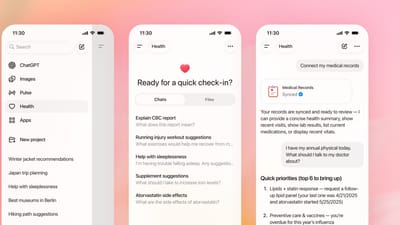
- ChatGPT Health is a sandboxed tab within ChatGPT for health‑related queries.
- Users can connect medical records and popular wellness apps for personalized answers.
- OpenAI partnered with b.well to enable secure medical‑record uploads.
- The feature launches via a waitlist beta and will roll out to all users over time.
- OpenAI states the product is not intended for diagnosis or treatment.
- Mental‑health conversations are supported with safeguards and referrals to professionals.
- Enhanced privacy includes purpose‑built encryption and separate data handling.
- Conversations in the health tab are not used to train OpenAI’s core models by default.
- HIPAA does not apply to the consumer version of ChatGPT Health.
OpenAI Launches a Dedicated Health Tab
OpenAI announced the debut of ChatGPT Health, a sandboxed tab inside the ChatGPT interface that focuses on health‑related inquiries. The new space operates separately from the standard chat, featuring its own history and memory to provide a more secure environment for users seeking medical or wellness information.
Integration with Medical Records and Wellness Apps
The product encourages users to link personal medical records and a range of wellness applications, including Apple Health, Peloton, MyFitnessPal, Weight Watchers, and Function. By connecting these sources, ChatGPT Health can offer more personalized answers that draw on lab results, visit summaries, clinical histories, and fitness data such as movement, sleep, and activity patterns.
Partnerships and Access
To facilitate medical‑record uploads, OpenAI partnered with b.well, which provides back‑end integration and works with roughly 2.2 million providers. Access to the feature begins with a waitlist for a beta group of early users, with plans to expand gradually to all users regardless of subscription tier.
Scope and Limitations
OpenAI stresses that ChatGPT Health is not intended for diagnosis or treatment. The company acknowledges that many health conversations happen outside normal clinic hours, with users sending nearly 600,000 health‑related messages weekly. The tool is meant to help users understand test results, prepare for appointments, get dietary or fitness guidance, and explore insurance options based on personal health patterns.
Mental‑Health Considerations
Although the initial announcement did not focus heavily on mental health, OpenAI’s applications lead noted that the product can handle mental‑health topics and will direct users toward professionals, loved ones, or other resources when distress is detected. The company also mentioned safeguards to avoid alarmist responses for users prone to health anxiety.
Privacy and Security Measures
ChatGPT Health runs in a separate space with enhanced privacy protections, including purpose‑built encryption (though not end‑to‑end). Conversations in the health tab are not used to train OpenAI’s foundation models by default, and users are prompted to move health‑related discussions from the regular chat to the protected environment. OpenAI clarified that HIPAA does not apply to the consumer version of the product, as it is intended for personal use rather than clinical settings.
Broader Context
OpenAI highlighted that more than 230 million people worldwide ask ChatGPT health and wellness questions each week, and the company has consulted over 260 physicians to refine model outputs across 30 focus areas. The launch follows previous incidents where AI generated unsafe health advice, underscoring OpenAI’s emphasis on responsible deployment.
Source: theverge.com